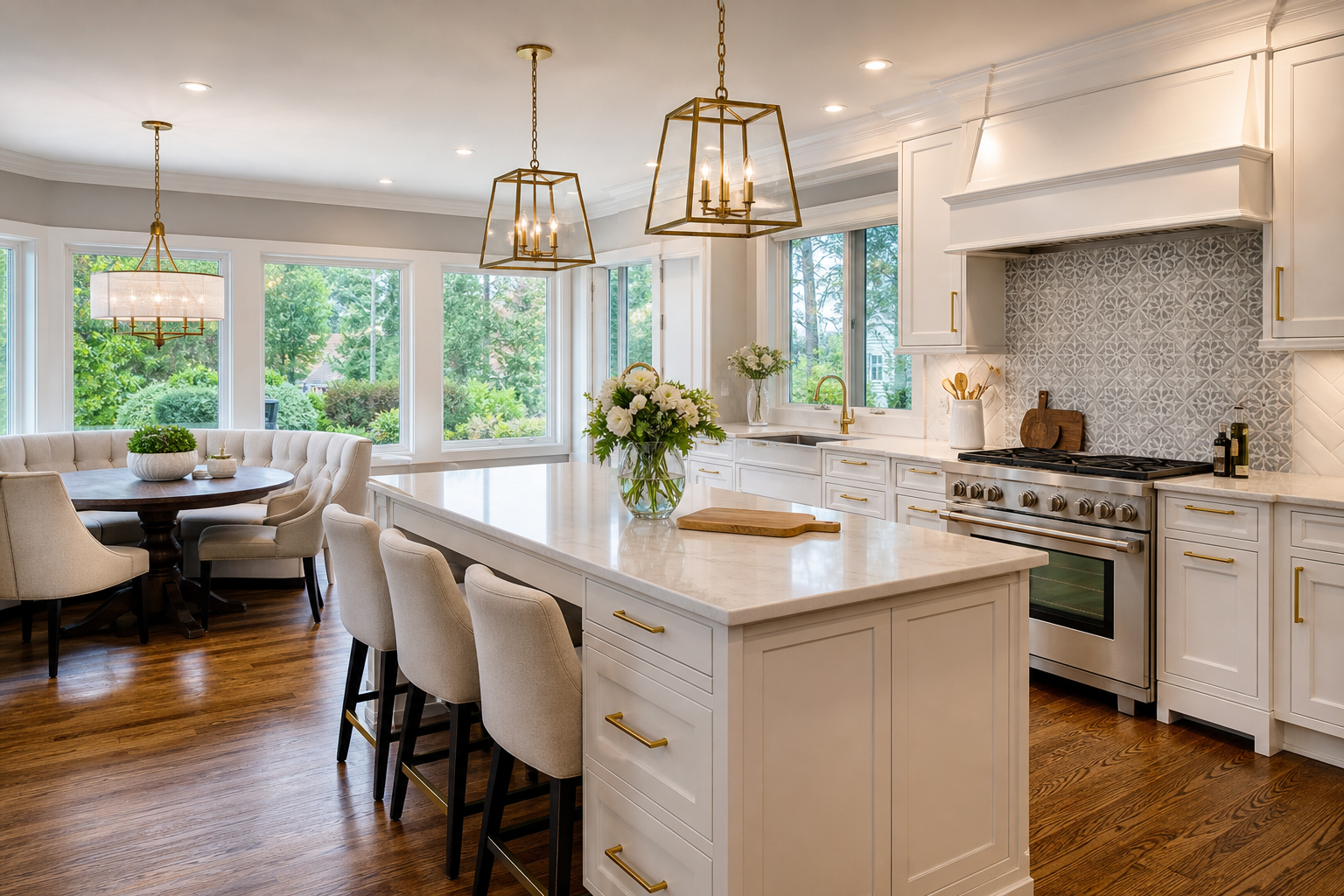
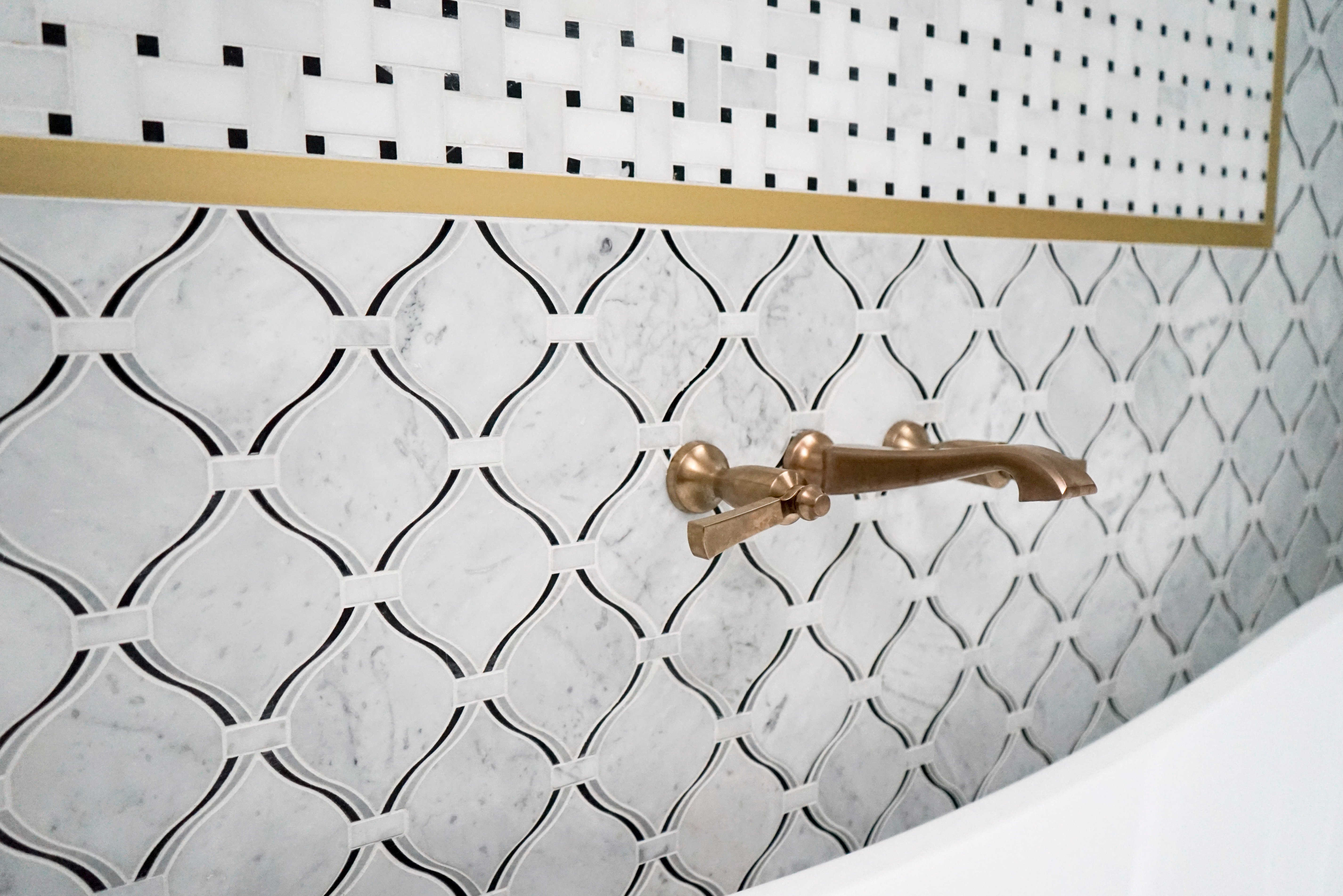
The materials in your home are chosen with intention—for their durability, their unique character, and the way they shape how each room feels and functions. From custom millwork and natural stone islands to brass hardware and exterior stone masonry, premium materials bring timeless luxury to a space.
However, longevity is never automatic. It requires a clear understanding of how each surface performs and the specific care it needs over time.
Here is how to properly maintain the most common high-end finishes throughout your home to ensure they retain their beauty for decades to come.
1. Natural Stone (Marble, Quartzite, Granite, & Limestone)
Used across kitchens, spa bathrooms, and outdoor living spaces, natural stone delivers a level of depth, movement, and individual variation that synthetic alternatives simply cannot replicate. Because natural stone is inherently porous, surface protection is critical.
Best Practices:
- Clean daily with pH-neutral solutions: Use mild dish soap and warm water or standard cleaners formulated specifically for stone.
- Wipe spills immediately: Pay close attention to acidic liquids (wine, citrus juice, coffee, tomato sauce) and dark oils.
- Protect against heat and scratches: Always place trivets under hot cookware and use cutting boards rather than prepping food directly on the stone.
- Reseal on a schedule: Periodically apply a high-quality impregnating sealer to create a barrier against moisture and staining.
What to Avoid & Watch For:
Watch Out for Etching: Never use vinegar, lemon juice, bleach, or harsh chemical bathroom cleaners on natural stone. Acidic substances react chemically with calcium carbonate in stones like marble and limestone, leaving permanent dull spots known as "etching."
2. Fine Woodwork & Architectural Millwork
From custom cabinetry and hardwood flooring to coffered ceilings and built-ins, natural wood introduces warmth and rich texture to fine interiors.
Best Practices:
- Dust regularly: Use a dry, soft microfiber cloth to prevent surface scratching.
- Use approved products: Clean only with manufacturer-recommended wood solutions.
- Manage humidity and sunlight: Keep indoor humidity levels consistent year-round to prevent wood from expanding or shrinking.
- Protect high-traffic zones: Place felt pads under furniture legs and use area rugs in high-use pathways.
What to Avoid & Watch For:
- Avoid over-cleaning: Excess water or harsh waxes can degrade protective topcoats over time.
- Watch for environmental wear: Fading, warping, or finish dulling are clear indicators of overexposure to direct sunlight, standing water, or fluctuating humidity levels.
3. Tile & Grout Systems
Tile is prized for its resilience in bathrooms, mudrooms, and kitchens. However, the long-term performance of any tiled surface depends heavily on the condition of the grout and sealant behind it.
Best Practices:
- Use non-abrasive cleaners: Stick to soft sponges or microfiber mops to preserve tile glazes and grout structures.
- Keep surfaces dry: Wipe down shower walls or high-moisture zones after heavy use to prevent hard water deposits.
- Reseal grout periodically: Apply a penetrative grout sealer every 1–2 years to maintain moisture and stain resistance.
What to Avoid & Watch For:
- Early warning signs: Cracking grout lines, persistent dark discoloration, or soft spots in surrounding drywall signal underlying moisture intrusion that requires prompt repair.
4. Architectural Glass & Metal Hardware
From custom glass shower enclosures to unlacquered brass plumbing fixtures and hand-forged hardware, decorative metal and glass accentuate fine interior design—but they reveal wear quickly if neglected.
Best Practices:
- Squeegee glass after use: Prevent hard water spots from etching into glass shower doors by clearing water immediately after bathing.
- Use gentle polish: Maintain metal fixtures with soft cloths and gentle, material-specific cleaners.
- Dry surfaces thoroughly: Prevent mineral deposits and corrosion by keeping fixture bases dry.
What to Avoid & Watch For:
- Avoid harsh abrasive pads: Wire brushes, steel wool, or abrasive scouring powders will permanently scratch metal plating and glass coatings.
5. Exterior Materials & Outdoor Living Spaces
Stone masonry, composite or hardwood decking, custom siding, and outdoor kitchens are engineered to endure weather changes, but seasonal care is necessary to ensure long-term performance.
Best Practices:
- Conduct seasonal cleanings: Power-wash or hand-scrub outdoor surfaces every spring to clear away pollen, organic debris, and winter grime.
- Inspect post-winter: Check masonry joints, decking boards, and exterior caulking after freezing temperatures pass.
- Reseal exterior wood & stone: Apply weather-resistant sealers to exterior wood decks and natural stonework as recommended by your builder.
- Winterize outdoor kitchens: Drain plumbing lines, cover built-in appliances, and shut off gas lines before the first hard freeze.
Surface Maintenance Quick Reference
| Material |
Primary Care Strategy |
Products to Avoid |
Maintenance Frequency |
| Natural Stone |
Clean with pH-neutral soap; reseal surface regularly |
Vinegar, citrus, bleach, abrasive pads |
Daily cleaning / Reseal every 12–18 months |
| Custom Woodwork |
Dry dust; apply manufacturer-approved wood cleaners |
Excess water, harsh waxes, strong solvents |
Weekly dusting / Spot clean as needed |
| Tile & Grout |
Non-abrasive cleaning; keep dry in wet zones |
Wire brushes, unsealed acidic cleaners |
Weekly cleaning / Reseal grout every 1–2 years |
| Glass & Metals |
Wipe dry daily; use non-abrasive microfiber |
Abrasive scouring powders, harsh chemicals |
Daily drying / Weekly detailed cleaning |
| Exterior Surfaces |
Seasonal power-washing; winterize outdoor utilities |
Leaving debris to rot on stone or wood decks |
Seasonal inspection (Spring & Fall) |
Final Thoughts
Staying proactive with material maintenance prevents the need for disruptive surface restoration down the road. By giving your home's custom finishes the specific care they require, you protect both the aesthetic beauty and the long-term value of your property.