It's the first question in almost every bathroom design meeting: do we keep the tub, or convert it to a walk-in shower? Here's the framework we use with Northern Virginia homeowners — including the one resale rule that settles most debates.
The resale rule that matters
Keep at least one tub in the house. Families with young children and many buyers' agents treat one bathtub as non-negotiable. As long as a hall or kids' bath has a tub, converting the primary bath to a glass walk-in shower is not just safe for resale — in our market it's usually preferred.
The case for the walk-in shower
- It's how adults actually bathe. Most primary-bath tubs get used a few times a year while the shower runs daily.
- Space. Removing a tub frees roughly 15 square feet — enough to turn a cramped bathroom into one with a real shower, a bench and sometimes a larger vanity.
- Aging in place. A curbless or low-curb entry with a bench and grab-bar blocking is the single best long-term investment in a bathroom.
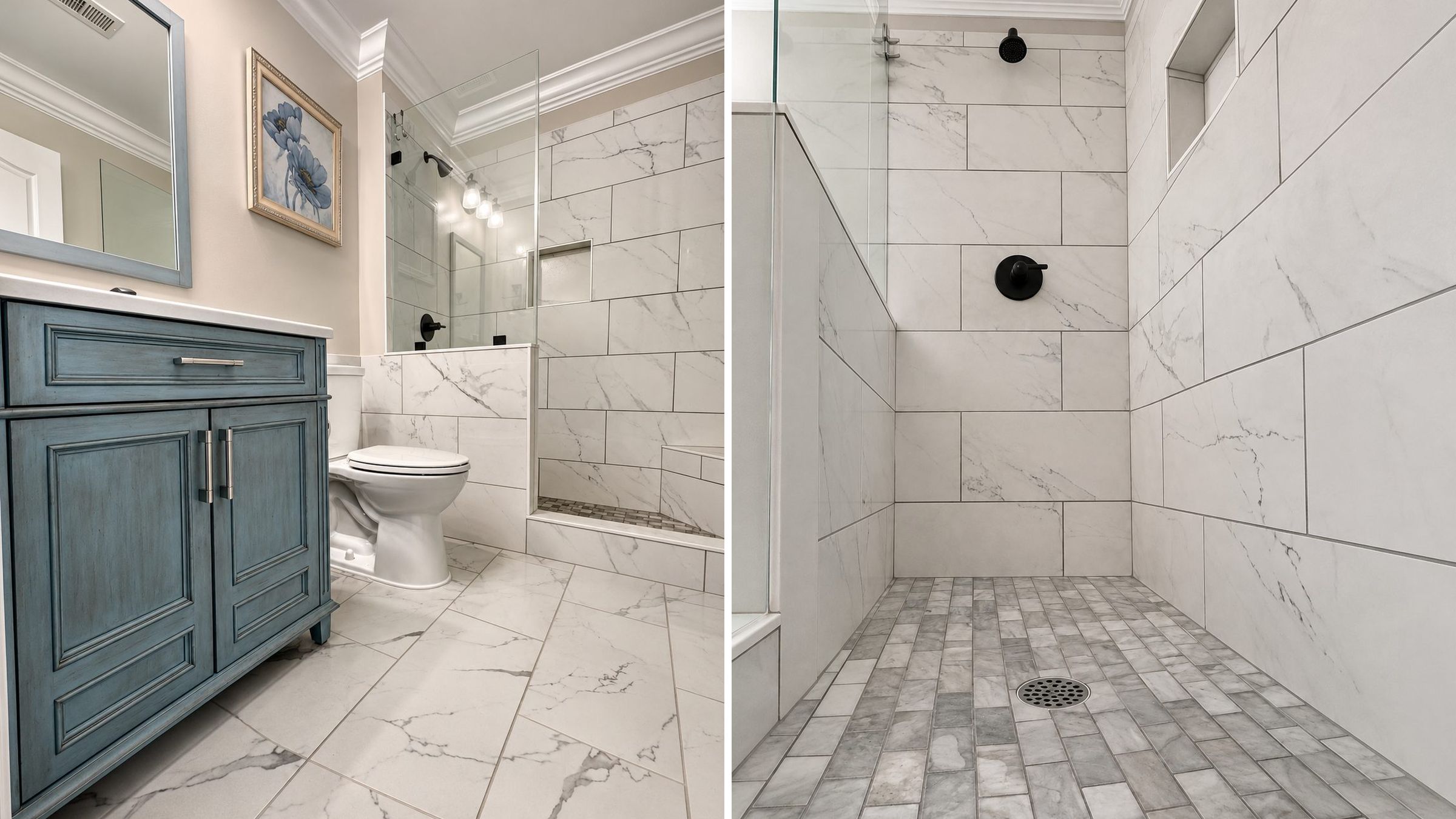
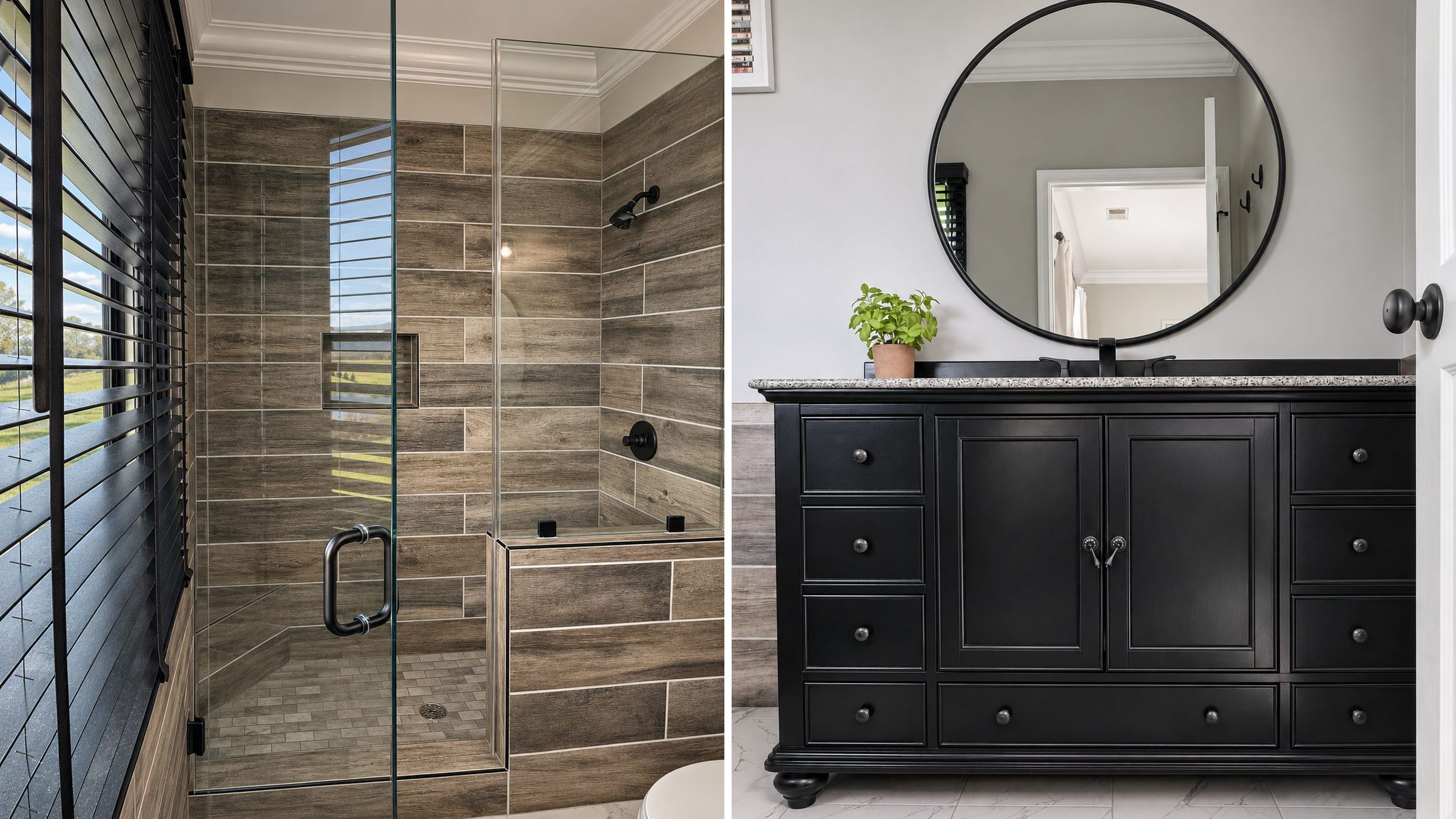
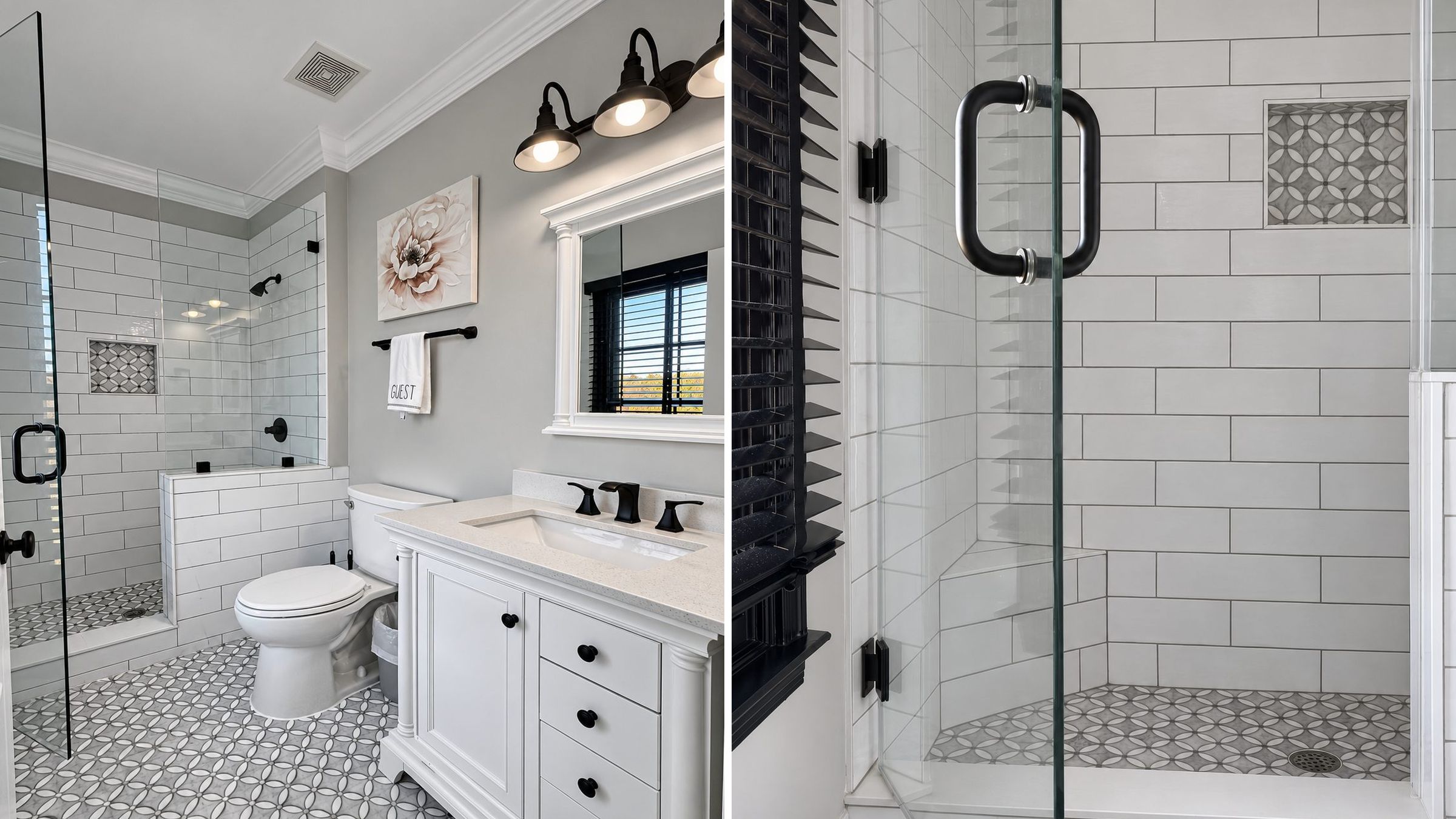
- The look. Floor-to-ceiling tile and frameless glass is the centerpiece of the modern bathrooms in our portfolio — see this Vienna primary bath.
The case for keeping (or adding) a tub
- Kids. Bathing small children in a shower is nobody's idea of fun.
- You actually soak. If a bath is your decompression ritual, design for it — a freestanding soaker is a beautiful focal point.
- It's the home's only tub. Then it stays, full stop.
What conversions involve
A tub-to-shower conversion in the same footprint is a standard scope inside our $30,000–$50,000 Signature bathroom tier: new pan and drain configuration, waterproofing, floor-to-ceiling tile, glass, and a permit because plumbing changes. Done piecemeal as a one-off swap it can be less — but pairing it with the full bathroom remodel is where the value is, since the walls are already open.
Can you have both?
In a larger primary bath, yes — the classic layout is a freestanding tub beside a glass shower. It needs roughly 100+ square feet to breathe. In standard-size Northern Virginia primary baths, choosing the shower and giving it the full footprint almost always produces the better room.
Frequently asked questions
Does removing a tub hurt resale value?
Not if another tub remains in the house. A dated tub-shower combo replaced by a glass walk-in shower typically helps the home show better.
What's a curbless shower and is it worth it?
The floor runs flush into the shower with no step. It requires recessing the pan during construction — easy in a remodel, hard later — and it future-proofs the bathroom for decades.
How long does a tub-to-shower conversion take?
As part of a full bathroom remodel, the project typically runs 3–5 weeks. The conversion itself is mostly tile and waterproofing time.
Designing a bathroom this year? See our bathroom remodeling page for cost tiers, or book a free consultation — we'll show you both layouts in photoreal 3D so you can decide with your eyes, not your imagination.
Planning a project
Planning a bathroom remodel in Northern Virginia: see real cost tiers from our own projects, and what drives each number.
Bathroom remodeling costs →